Coffea arabica / Genetics / Cup
Arabica
Arabica is the species that made specialty coffee famous, but it is not simply mild coffee. It is a forest plant, genetically unusual and agronomically delicate, capable of very aromatic cups when environment and management support it.
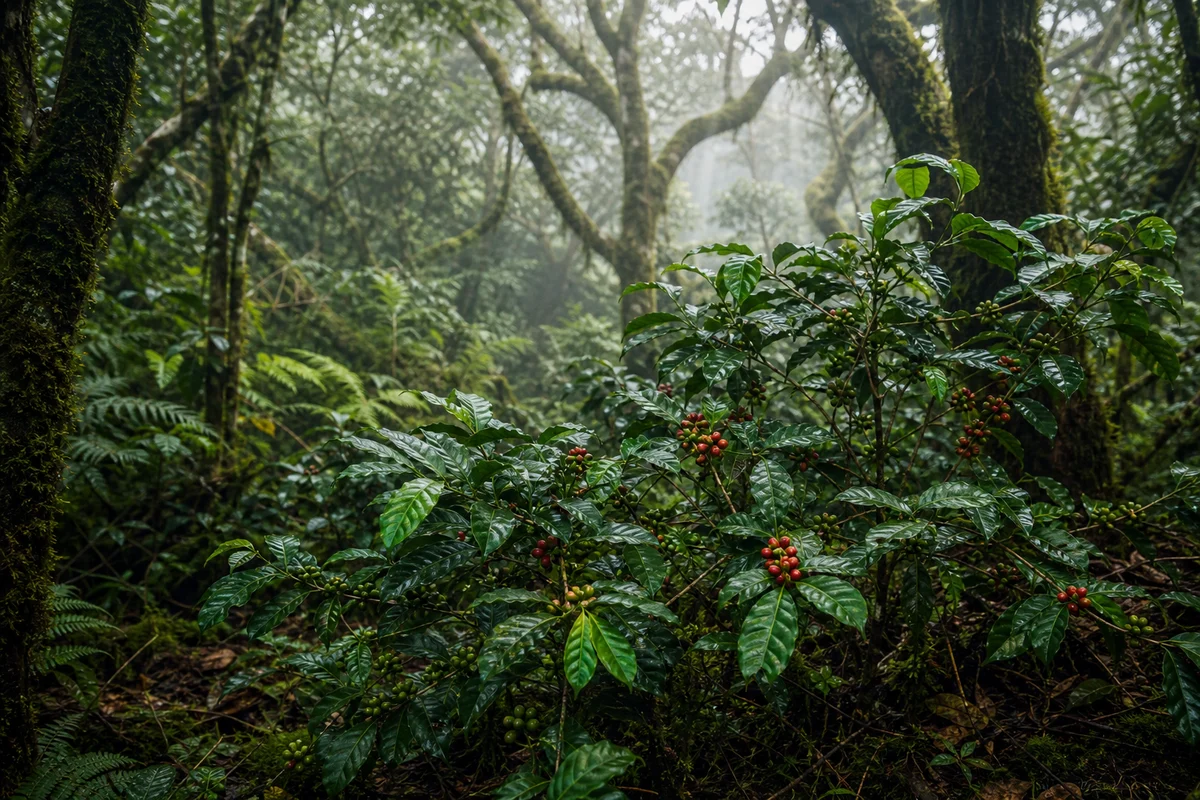
Coffea arabica L., an accepted species in the Rubiaceae family.
Allotetraploid: it combines lineages close to C. canephora and C. eugenioides, with 44 chromosomes.
Mostly self-pollinating. It can fertilize itself, fixing traits but reducing diversity in cultivation.
Humid montane forests of East Africa, with shade, altitude and moderate temperatures.
Botanical identity
What Coffea arabica is
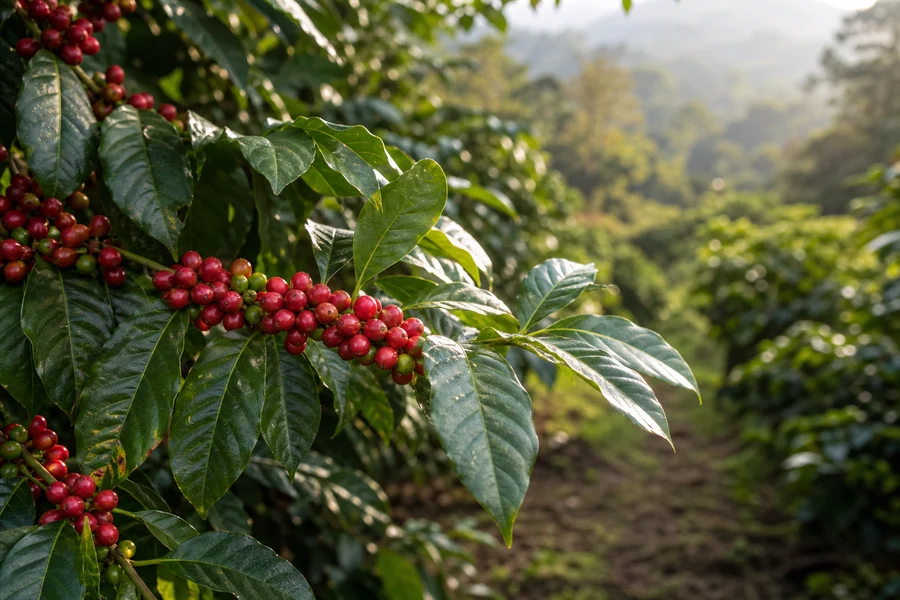
Coffea arabica is an evergreen coffee species. On farms it is pruned as a shrub for harvest and renewal, but botanically it can behave as a small tree. Its flowers are white and fragrant; its fruits, called cherries, change from green to red, yellow or orange depending on genetic material.
Its most important trait is genetic. Arabica formed through ancient natural hybridization between two diploid lineages related to Coffea canephora and Coffea eugenioides. It then duplicated its chromosome set, which is why it is described as allotetraploid, with 44 chromosomes.
This story explains two sides of the species. Arabica can produce refined, floral, citrusy, sweet and complex sensory profiles. But much of global cultivation has little genetic diversity, making it vulnerable to disease, heat and abrupt climate changes.
Clear biology
From flower to seed
Thinking of arabica as a biological chain helps explain the cup. Well-synchronized flowering supports even ripening. A ripe cherry contains seeds with sugars, acids, proteins, lipids and aromatic precursors. Roasting transforms that raw material, but cannot invent what the plant did not develop.
Evergreen leaf
Keeps green leaves throughout the year. In its natural environment it behaves as an understory shrub, capturing filtered light and avoiding extremes of sun and wind.
Synchronized flowering
After rain or humidity changes, many plants flower almost at once. The flower is white, aromatic and brief; the following fruit takes months to ripen.
Cherry, not bean
The fruit is a drupe. What we call beans are seeds, usually two per cherry, covered by pulp, mucilage, parchment and silver skin.
Moderate caffeine
Arabica usually has less caffeine than robusta. This influences bitterness, plant defense and sensory perception, although it does not define quality by itself.
Origin and domestication
From Ethiopia and neighboring regions to the world
The greatest natural diversity of arabica is in East Africa, especially montane forests of Ethiopia and nearby areas. There the plant did not grow as monoculture, but under shade, in ecosystems with humidity, plant competition, microorganisms and local climate cycles.
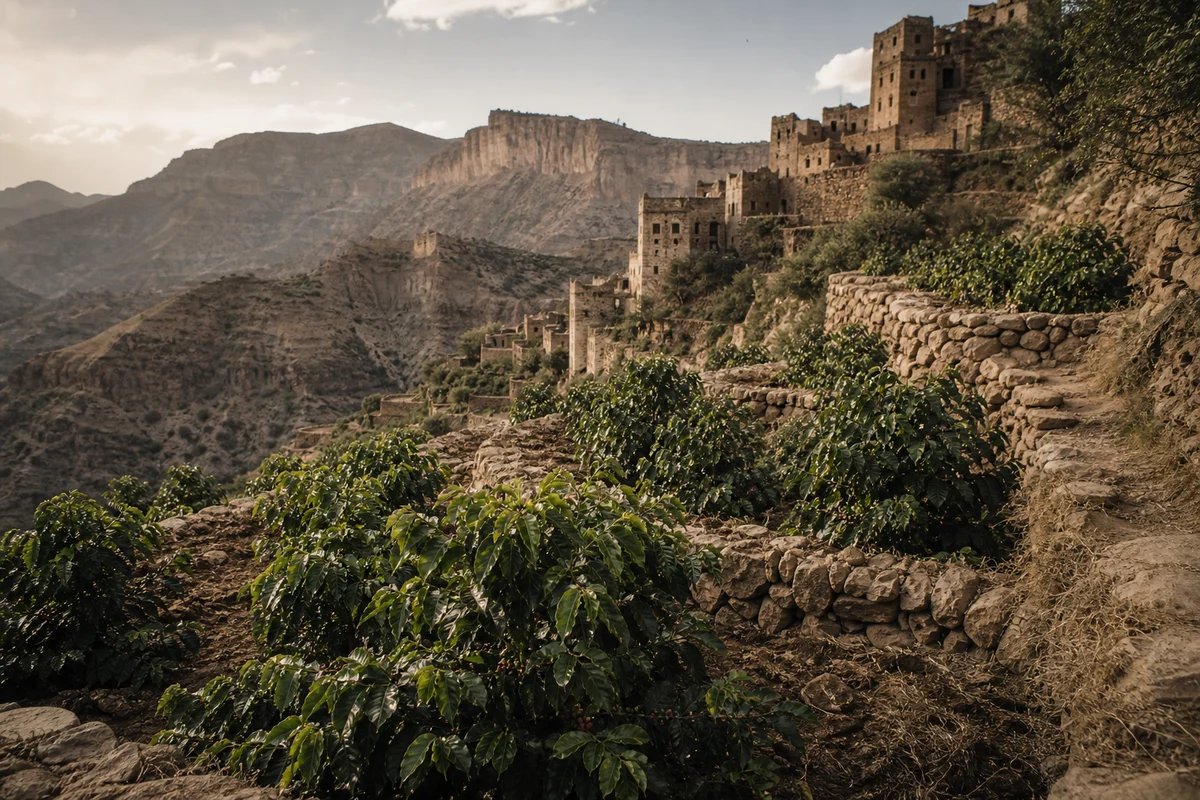
Historical domestication passed through Yemen. From that corridor, plants left that gave rise to the major cultivated trunks, especially Typica and Bourbon. That journey made coffee global, but also created a bottleneck: many plantations descend from a small sample of original diversity.
Cup
Why arabica can taste so complex
Arabica is often associated with sweetness, aroma, elegant acidity and less bitterness than robusta. That reputation has a basis, but should not be simplified: poorly grown or processed arabica can be flat, vegetal or defective; excellent arabica needs suitable genetics, favorable environment and precise decisions along the whole chain.
Organic acids
They contribute brightness, fruit and freshness. In balance they give structure and liveliness.
Sugars and precursors
During roasting they participate in Maillard reactions and caramelization, creating caramel, bread, nut or chocolate aromas.
Lipids
Arabica has an important lipid fraction, associated with aroma, texture and persistence, especially in espresso.
Genetics and ripening
Variety marks potential, but slow ripening in cool climates helps develop complexity and sweetness.
Agronomy
A high-quality but vulnerable species
Arabica expresses its potential best in areas with moderate temperatures, cool nights, well-distributed rain and draining soils. Altitude helps because it slows ripening and can favor more flavor precursors, but altitude alone does not guarantee quality.
The plant needs management. Shade can reduce heat stress and support biodiversity, but too much shade lowers productivity and can increase problematic humidity. Pruning renews productive tissue. Nutrition supports flowering, fruit filling and resistance. Selective harvest avoids mixing green, ripe and overripe cherries.
Hemileia vastatrix can destroy leaves and reduce production. Many traditional arabicas are vulnerable, which is why resistant lines exist.
More heat, irregular rain and new pest pressures move suitable zones. Altitude no longer protects as reliably as before.
Much cultivated arabica outside Ethiopia descends from few plants. That uniformity helps recognizable quality, but increases sanitary risk.
It needs nutrition, pruning, shade management, selective harvest and careful drying. The species cannot compensate for careless processing.
Context
Arabica is not a single thing
Saying 100% arabica tells you the species, but not enough to understand the coffee. Within arabica there are traditional varieties, compact mutations, African selections, regional crosses, rust-resistant materials and F1 hybrids. Each group responds differently to climate, disease, productivity and cup.
Arabica
More aromatic and sweet on average, lower caffeine, better adapted to cool altitudes, but more sensitive to disease and heat.
Robusta
More vigorous, more caffeine, better heat and low-altitude adaptation. It can add body and crema; fine robusta shows it can also be clean and complex.
Varietals
Within arabica there are many materials: Typica, Bourbon, Caturra, Gesha, SL28, Catimor, Sarchimor and F1 hybrids do not behave the same.
Process
Species is only the beginning. Harvest, fermentation, drying, storage, roasting and brewing decide whether potential reaches the cup.
Varietals
The next level: Typica, Bourbon, Gesha, SL28 and more
To go deeper, move from species to varietal. Typica and Bourbon explain classic history; Caturra, Pacas and Villa Sarchi explain plant architecture changes; Gesha, SL28 and African landraces explain sensory diversity; Catimor, Sarchimor and F1s explain the modern search for resistance and productivity.
That layer deserves its own page because it is not only about flavor. Each varietal has origin, plant architecture, sanitary risk, cup potential and a different role in coffee's future.
Reference sources
This page summarizes botanical, genetic and agronomic information from technical references and specialized organizations.