Pressure / Preparation / Adjustments
Espresso
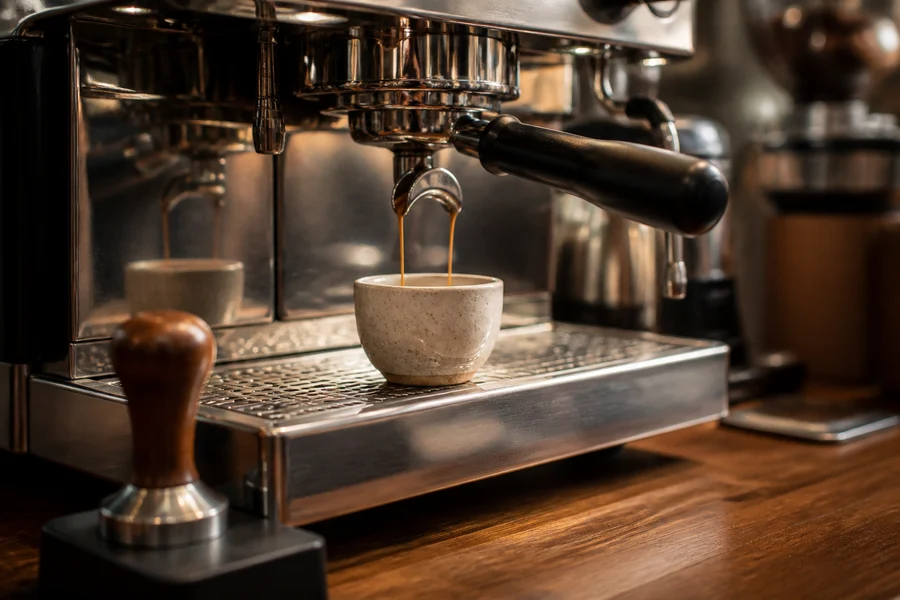
Real espresso is the most technical discipline of coffee brewing. It requires forcing hot water under pressure through a compact bed of finely ground coffee to extract a high-density brew in less than 30 seconds. Every tiny variation in grind size, tamping, or water temperature translates immediately into the cup.
18 g (in double basket)
36 g - 40 g (1:2 extraction ratio)
25 - 30 seconds
9 bar (rotary or vibratory pump)
90°C - 95°C (depending on roast level)
Extraction principle
How this method works
A traditional espresso is defined by three fundamental pillars: pump pressure (typically stabilized at 9 bars to ensure water passage without over-extracting), volumetric concentration (a short yield of 30 ml to 40 ml for a double shot), and a dense layer of crema. Crema, formed by an emulsion of coffee oils saturated with carbon dioxide gas (CO₂), is not only the visual indicator of freshness, but also acts as a seal preserving the volatile aromas of the cup.
To achieve this extraction, water at a constant temperature between 90°C and 95°C must cross the coffee puck offering the right resistance. If the grind is too coarse, water passes too fast without dissolving sweet compounds (under-extraction, sour coffee). If it is excessively fine, the basket will clog, burning the coffee and extracting unwanted bitterness (over-extraction, dry and astringent coffee).
At home, mastering the coffee puck requires understanding both essential and secondary equipment. An espresso machine and a high-quality burr grinder are essential, as traditional blade grinders chop unevenly and heat the beans. Additionally, a precision scale (0.1 g) and a WDT distribution tool make the difference between irregular flow (channeling) and a homogeneous puck.
Adjustment framework
Read the cup before changing the recipe
Measure a stable baseline, observe the result, and change one variable.
- Measure
Set a repeatable baseline
1:2 (18g coffee for 36-40g beverage) in 25-30 s · Very fine
- Observe
Taste the intended profile
Extremely concentrated, dense, and aromatic beverage, crowned by a hazelnut-colored crema layer. It is the indispensable base for cappuccinos, lattes, and flat whites.
- Adjust
Adjust only one variable at a time
If your shot runs too fast or too slow, change only the grind size. If you modify dose, grind, and temperature all at once, you will never know which variable fixed or ruined the taste.
Visual guide
Perfect Espresso Parameters
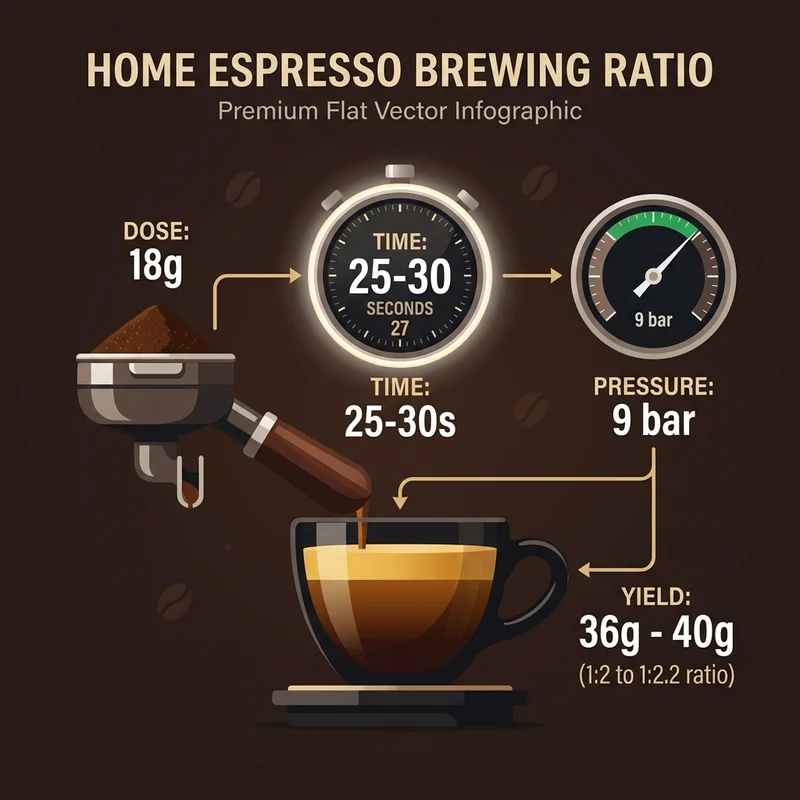
This infographic illustrates the recommended extraction ratio (1:2 ratio) for starting with home espresso. The balance between the fine dry grounds dose and the final cup yield weight is monitored using a scale and timer to ensure consistency and prevent bitter or sour drinks.
Applicable gear
Buying guides for this method
If you need to choose gear, these catalog tools fit the recipe. Each link takes you directly to its buying recommendations.
Process
Step-by-step preparation
Preheat and purge
Turn on your machine in advance. Lock the portafilter into the group head to heat the entire metal system. Run a quick purge of hot water through the group head shower screen to clear out previous oils and stabilize temperature. Remove the portafilter and dry it completely with a clean, dry cloth.
Precise grinding
Weigh exactly 18 g of fresh coffee beans. Grind directly into the basket using a burr grinder specific for espresso. The texture must be very fine, similar to fine table salt or beach sand, offering a soft and uniform consistency without large chunks.
Distribution and WDT
To prevent water from finding paths of least resistance (channeling), use a fine-needle distribution tool (WDT). Move them in circles from bottom to surface to break up all clumps formed during grinding. Tap the portafilter gently on the counter to settle and level the bed.
Tamping (Straight tamp)
Rest the portafilter on a firm tamping mat. Place the tamper completely level and apply even downward pressure until you feel the coffee resist and stop compressing (about 15 kg). The alignment is critical: a tilted tamp will channel water to the thinner side.
Controlled pre-infusion
Wipe any loose grounds off the portafilter ears and lock it gently but firmly into the group. If your machine allows manual pre-infusion, activate a low-pressure water flow for 5 to 8 seconds. This saturates the coffee, swelling the puck to resist the subsequent high pressure evenly.
Extraction and active weighing
Activate the pump at high pressure (9 bar) and place your cup and precision scale underneath. Start the timer. Observe the stream: it should start dense and dark, gradually turning into a hazelnut tone. Stop the pump immediately when the scale reads between 36 g and 40 g of liquid yield.
Tips
How to improve preparation
Adjust only one variable at a time
If your shot runs too fast or too slow, change only the grind size. If you modify dose, grind, and temperature all at once, you will never know which variable fixed or ruined the taste.
Respect the basket capacity
Each basket is designed for a specific weight (e.g., 18 g). Under-dosing (<16 g) leaves too much headspace, causing water to break the puck. Over-dosing (>20 g) makes coffee touch the shower screen before expanding, clogging the flow.
Water represents 90% of your espresso
Use low-mineral or filtered water. Hard water with excess scale will not only destroy the delicate sweet and citrusy notes of specialty coffee, but it will also clog your machine's internal pipes and boiler in a few months.
Clean after every session
Purge the group head immediately after removing the portafilter to wash away stuck grounds. Wipe the steam wand with a wet cloth immediately after use to prevent milk from burning and clogging the holes.
Diagnosis
Common mistakes
Espresso runs too fast (<20 seconds)
The resistance is insufficient. Grind finer to compress the puck more. If you are already at the finest setting, check if your coffee is too old (de-gassed) or increase the dose slightly by 0.5 grams.
Coffee streams are uneven or spray
This is a clear symptom of channeling. Water has cracked the coffee puck. Improve your distribution routine using a WDT tool and make sure to tamp completely level, avoiding knocking the portafilter sides after tamping.
Flavor is too sour or salty
Severe under-extraction. Water has not extracted the sugars. Grind finer, increase brew temperature if adjustable, or increase the final liquid yield (e.g., from 36g to 42g) to allow water to dissolve the sweet tail end.
Flavor is bitter, dry, or burnt
Over-extraction. Bitter tannins and woody fibers have been pulled. Grind slightly coarser, shorten the recipe yield (e.g., stop at 32g instead of 38g), or lower the water temperature if using a dark roast coffee.
Sources & references
Authoritative references
Compare methods
Back to the general guide
Use this recipe as a starting point. Then compare other methods to decide whether you want more body, more clarity, more intensity or easier daily brewing.