Coffea canephora / Resilience / Fine robusta
Robusta
Robusta is not simply strong and cheap coffee. It is the commercial expression of Coffea canephora, a diverse, resilient species that is increasingly important for understanding coffee's future in a warmer climate.
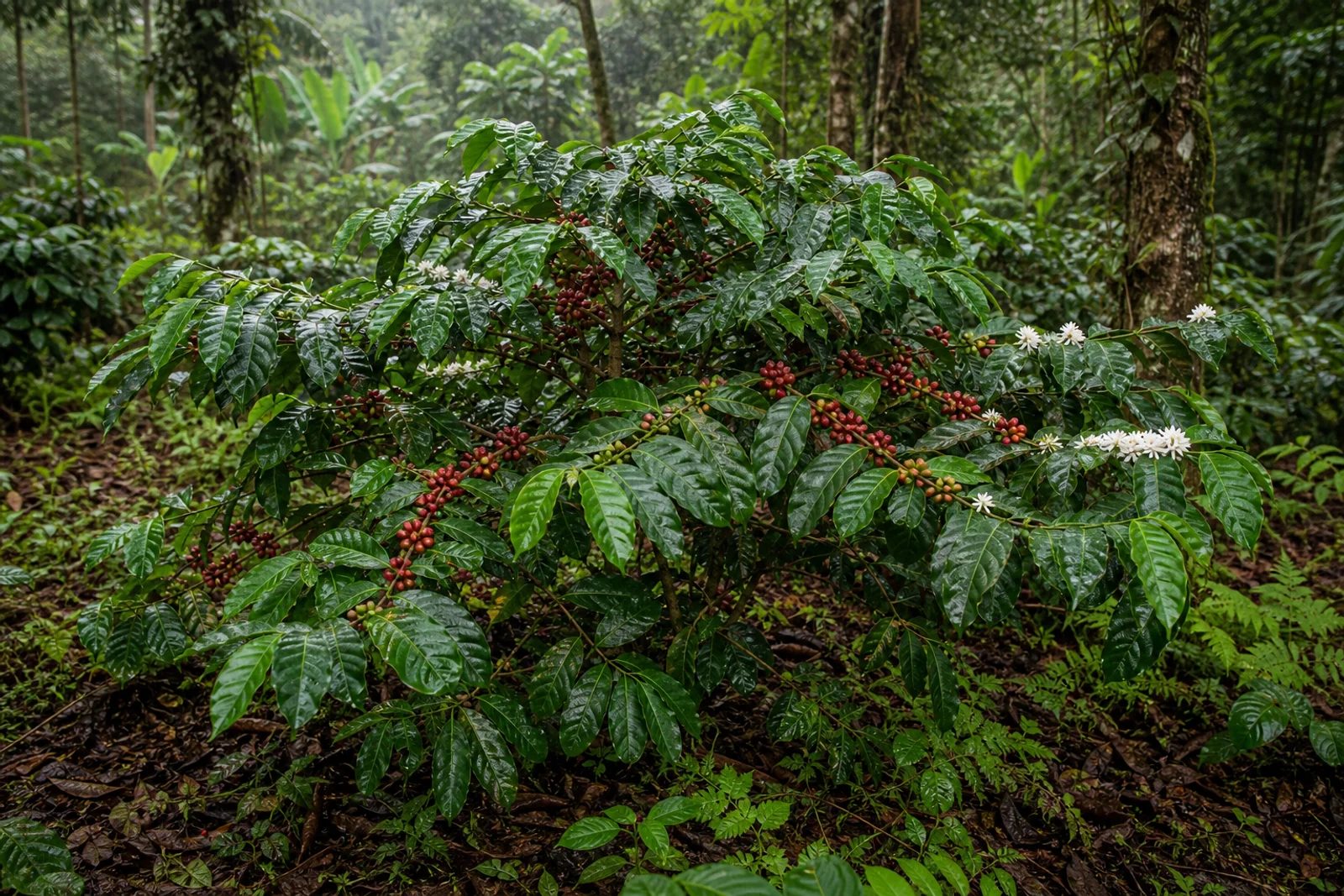
Coffea canephora. Robusta is the commercial name for many materials within this species.
Usually outcrossing: it needs compatible plants to cross, unlike arabica which self-pollinates easily.
Usually has more caffeine than arabica, influencing bitterness, plant defense and perceived body.
Tolerates heat, humidity and low altitude better, although high quality requires careful management.
Botany
What makes Coffea canephora different
Coffea canephora is a diploid species with broad genetic diversity. Many plants the market calls robusta belong to this group, but they are not all the same: groups, clones and selections differ agronomically and sensorially.
Compared with arabica, canephora is usually more vigorous, more heat tolerant and able to produce at lower altitudes. It also tends to show more natural resistance to some biological pressures. That resistance does not make it indestructible: it still needs nutrition, pruning, shade or water management depending on environment.
A key difference is reproduction. Arabica self-pollinates easily; robusta depends more on crossing between compatible plants. That increases diversity, but makes uniformity harder if the plantation is not designed well.
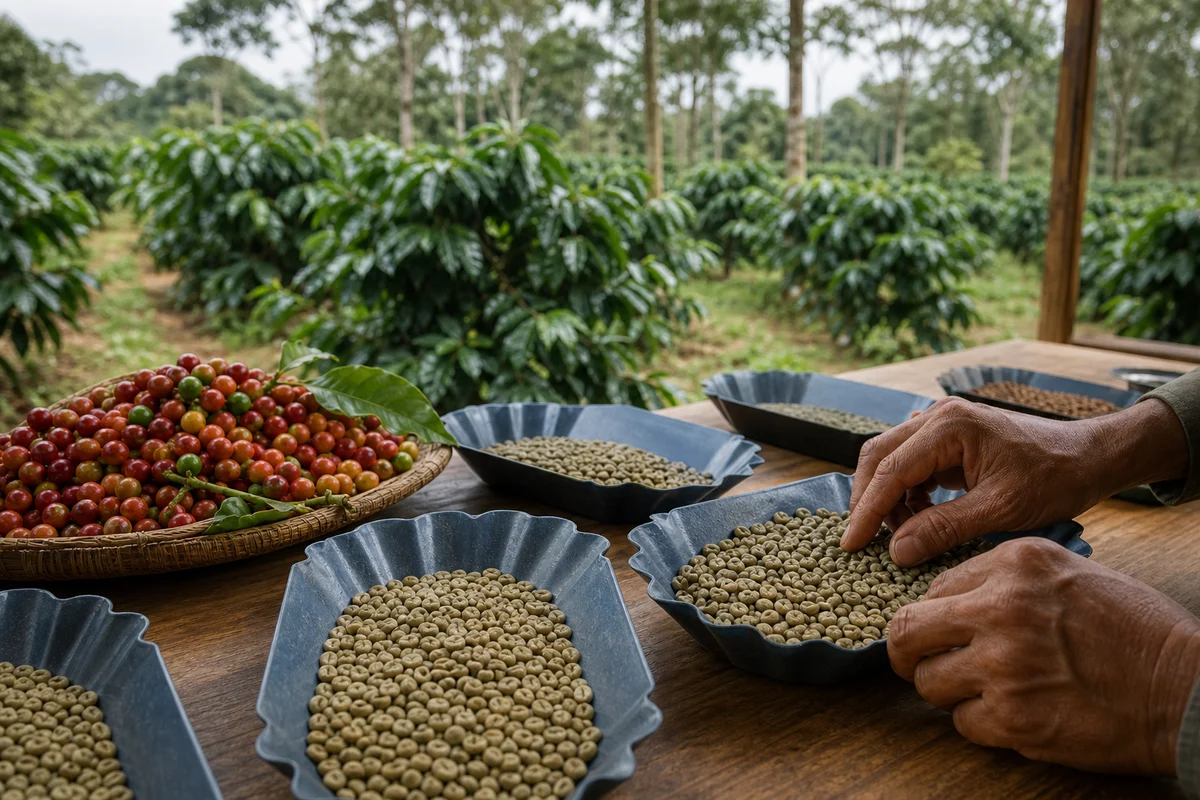
Comparison
Robusta versus arabica
Genetics
Arabica is allotetraploid and mostly self-pollinating. Canephora is diploid, more diverse and depends more on crossing.
Climate
Robusta adapts better to lowlands, heat and humidity; arabica usually expresses better quality in cool highlands.
Cup
Traditional robusta can be intense, bitter and earthy. Fine robusta seeks cleanliness, sweetness, cocoa, spice and body.
Use
It is key for espresso crema and body, blends, soluble coffee and increasingly well-processed specialty lots.
Fine robusta
Why robusta is changing reputation
For a long time, robusta was associated with volume, soluble coffee, cheap blends and bitter cups. That reputation came from a partial reality: many lots were harvested without selection, dried poorly and roasted dark to hide defects. But the species does not force defective coffee.
Fine robusta applies quality criteria similar to specialty coffee: ripeness, traceability, clean processing, controlled drying, classification and rigorous sensory evaluation. When handled well, it can show cocoa, nuts, spices, sweetness, high body and persistent crema in espresso.
Quality
What good robusta needs
Ripe harvest
Selecting ripe cherries is decisive. Unripe robusta easily becomes hard, vegetal and astringent.
Clean fermentation
The species is not synonymous with defects; many defects come from poor processing, uneven drying or bad storage.
Stable drying
Slow, even and protected drying reduces moldy, phenolic or damp-wood notes.
Specific roasting
Robusta should not be roasted like arabica by inertia. Its density, chemistry and cup goal need their own curve.
Climate future
A strategic species
Rising temperatures and disease pressure make robusta increasingly important. It does not automatically replace arabica: it offers another agronomic architecture and another sensory expression. In many regions it can sustain income where arabica loses viability.
The current question is not whether robusta is better or worse. The question is what kind of robusta, produced how, in what place, with what cup goal and with what level of traceability.
Reference sources
Summary based on specialized botanical and coffee references.