Comparisons / Machines / Home Espresso
Best Value Home Espresso Machine
We compare the home espresso machines that best balance price and in-cup results: from the compact De'Longhi Dedica to the prosumer jump of the Lelit Anna, by way of two cult references: the Sage Bambino Plus and the Gaggia Classic Evo Pro.
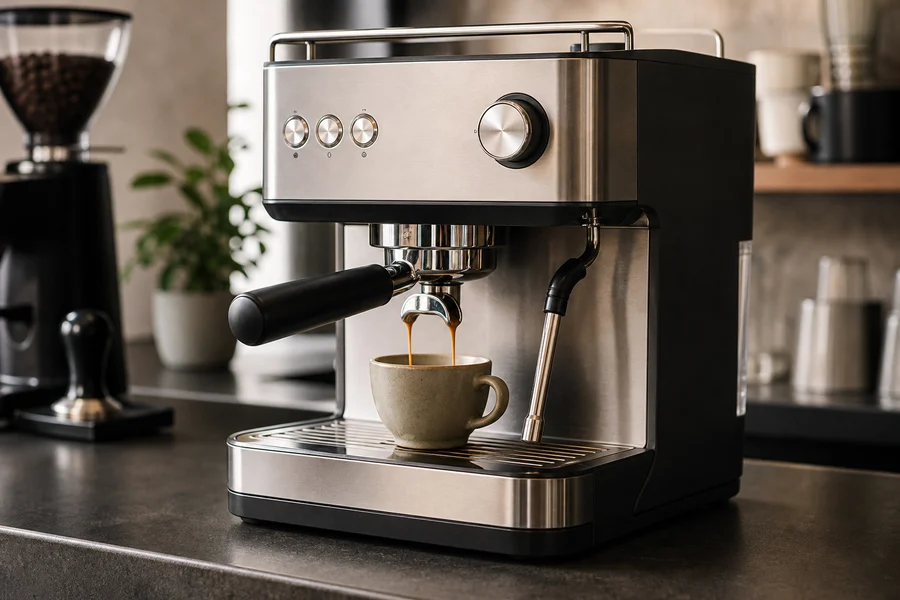
Value for money isn't the cheapest, it's what ages best
A good home espresso machine should last for years and grow with you. So in this comparison we are not after the cheapest machine, but the one with the best ratio of price, build quality and real in-cup potential. If you are still deciding between a traditional portafilter machine and one-touch push-button convenience, check out our manual vs. superautomatic espresso machine comparison. The factors that matter most are the group diameter (51, 54 or 58 mm) and the type of basket (pressurised or not), because they determine both the accessory ecosystem and whether you can truly extract specialty coffee. Remember the machine is only half the equation: without a capable burr grinder, none of these machines will deliver.
Quick comparison: the 4 machines at a glance
From the most compact and affordable option to the prosumer jump with temperature control.
| Model | Group | Thermal system | Steam wand | Basket | Approx. price | Best for |
|---|---|---|---|---|---|---|
| De'Longhi Dedica EC685 | 51 mm | Thermoblock (fast) | Manual (panarello) | Pressurised | €170 | Small kitchens and a first espresso |
| Sage Bambino Plus | 54 mm | ThermoJet (ready in 3 s) | Automatic (microfoam) | Non-pressurised | €530 | Automatic microfoam and real extraction |
| Gaggia Classic Evo Pro | 58 mm | Aluminium boiler | Manual (punchy) | Non-pressurised | €430 | Traditional technique and modding |
| Lelit Anna PL41TEM | 57 mm | Single boiler with PID | Manual | Non-pressurised | €550 | Temperature stability and the prosumer jump |
Technical fundamentals
What to look at before buying
1. Group diameter (51/54/58 mm): 58 mm is the professional standard with the widest accessory ecosystem and the ideal base to learn technique. Sage's 54 mm is an excellent middle ground. 51 mm is the most limited for upgrades, fine to start. See our espresso accessories compatibility guide for exact tamper and basket sizing per machine.
2. Pressurised vs. non-pressurised basket: the pressurised one forgives the grind but flattens flavour; the non-pressurised one demands a burr grinder but enables real specialty-coffee extraction. It's the difference between decorative crema and an espresso with body and aroma.
3. Thermal system (thermoblock vs. boiler): thermoblock/ThermoJet heat in seconds and are ideal for fast home use; boilers offer more stability and sustained steam. A factory PID (Lelit Anna) adds constant temperature shot after shot.
4. Steam wand: if you love cappuccino or flat white, the wand matters as much as the group. The Bambino Plus's automatic wand textures microfoam with no skill; the manual ones (Gaggia, Lelit) give more control in exchange for practice.
⚠️ Buying in Spain (EU)
Make sure to buy the European 220-240V version with an EU plug: avoid 110V imports, which need a transformer and void the warranty.
Buying on Amazon.es gives you an EU 3-year warranty and immediate availability of consumables (group gaskets, descalers and water filters) to extend the machine's life.
Detailed analysis
The 4 best value home espresso machines
Their real strengths and weaknesses so you can pick by level and budget.
De'Longhi Dedica EC685
Your first espresso in small kitchens: only 15 cm wide and almost instant heat-up.
- Category
- Máquina espresso
- Analysis and pros/cons
- Fast-heating thermoblock, 51 mm group and pressurised basket that forgives an imperfect grind. Pros: price, size and ease. Cons: weak manual steam wand and the 51 mm group limits the step up to barista technique; quality microfoam is hard to achieve.
Sage Bambino Plus
Compact espresso machine to learn serious espresso at home.
- Category
- Máquina espresso
- Analysis and pros/cons
- Stands out for fast heat-up (ThermoJet, ready in 3 s) and an automatic milk frother that textures café-grade microfoam. Non-pressurised basket for real extraction. The easiest to enjoy from day one.
Gaggia Classic Evo Pro
Traditional espresso technique with a 58 mm group and a huge modding community.
- Category
- Máquina espresso
- Analysis and pros/cons
- Single aluminium boiler, commercial 58 mm portafilter and non-pressurised basket for real extraction. Pros: punchy manual steam, longevity and endless spare parts. Cons: steeper learning curve and thermal stability without factory PID.
Lelit Anna PL41TEM
The prosumer jump with PID temperature control for under €600.
- Category
- Máquina espresso
- Analysis and pros/cons
- Single boiler with programmable PID for stable temperature, 57 mm group and solid build. Pros: the best bridge into specialty coffee without going dual-boiler. Cons: needs a capable burr grinder and some maintenance.
Prices and availability on Amazon.es may vary from this analysis; always check the listing before buying.
Quick verdict by profile
If you're starting on a budget
The De'Longhi Dedica EC685 is the most sensible entry: tiny footprint, instant heat-up and a no-fuss way to try home espresso.
If you want lattes without the hassle
The Sage Bambino Plus: its automatic frother gives café-grade microfoam and its non-pressurised basket allows real extraction. The easiest to enjoy.
If you want to learn real technique
The Gaggia Classic Evo Pro: 58 mm group, eternal spare parts and a huge modding community. The most long-term value for the money.
If you're chasing specialty coffee
The Lelit Anna PL41TEM: factory PID for stable temperature and prosumer build for under €600.
FAQ
Frequently asked questions about espresso machines
Which portafilter size should I get: 51, 54 or 58 mm?
58 mm is the professional standard: it has the widest accessory ecosystem (tampers, precision baskets, distributors) and produces a wider, more even puck, so it is the best base for learning barista technique (Gaggia Classic, Lelit Anna). Sage's 54 mm is an excellent balance of quality and convenience. The De'Longhi Dedica's 51 mm is the most limited: fine to start, but you will find fewer upgrade accessories.
Pressurised or non-pressurised basket? What's the difference?
A pressurised basket (the one the Dedica ships with) adds a valve that creates artificial pressure, so it forgives a mediocre grind and produces easy but flat, one-dimensional crema. A non-pressurised basket demands a burr grinder and good technique, but enables real specialty-coffee extraction with body and aroma. The 58 mm machines (Gaggia, Lelit) and the Sage include non-pressurised baskets to make that jump.
Is paying more for PID control worth it?
PID keeps water temperature stable shot after shot, which means repeatable results and less bitterness from overheating. On single-boiler machines without PID (like the stock Gaggia) you have to 'temperature surf'. If you want to move toward specialty coffee without fuss, a machine with factory PID like the Lelit Anna PL41TEM justifies the premium.
Should I invest more in the machine or the grinder?
The grinder. An excellent machine with a poor grinder will pull mediocre shots, because grind consistency defines extraction. The practical advice is to split the budget evenly and, if you must cut, cut the machine before the grinder. See our best espresso grinder guide to pick the right pairing.
Next step
Pick the grinder that matches your machine
The machine is half the equation: pair your espresso machine with a good burr grinder to unlock its full potential.