Comparisons / Espresso Machines / Buying Guide
Manual vs. Superautomatic Espresso Machine
The ultimate dilemma for home coffee lovers: the one-touch convenience of fresh beans ground on demand, or the unrivaled control and cup quality of the manual barista ritual? We compare extraction quality, speed, real maintenance, and help you choose the right setup.
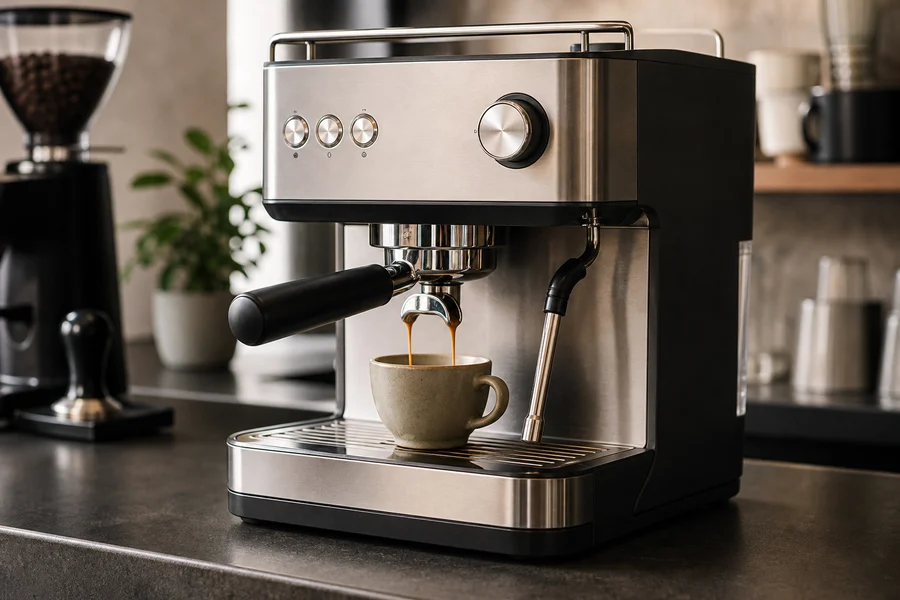
Choose a Superautomatic if:
- You want freshly ground coffee in under 45 seconds with zero mess.
- You rush through busy mornings and value consistency without a learning curve.
- Multiple people in your home drink different beverages (espressos, americanos, lattes).
- You don't want to purchase or dial in a separate coffee grinder.
Choose a Manual (Portafilter) if:
- You crave the thick crema, syrupy body, and authentic texture of a specialty cafe.
- You want to explore specialty coffee and taste nuanced fruity or floral notes.
- You want to master tamping, distribution, and milk texturing for silky latte art.
- You prefer modular equipment that can be upgraded with standard accessories over time.
Comparison Table: Manual vs. Superautomatic Head to Head
Key differences across technical specs, daily workflow, and maintenance.
| Criteria | Manual Portafilter Machine | Superautomatic Machine | Advantage |
|---|---|---|---|
| Espresso Cup Quality | Excellent (elastic crema, syrupy body, complex origin notes) | Good to decent (lighter, foamier crema) | Manual |
| Brew Time per Cup | 2 to 4 minutes (grinding, tamping, pulling, wiping) | 30 to 60 seconds (push 1 button) | Superautomatic |
| Milk Texturing (Latte Art) | Silky microfoam with commercial-style steam wand | Automated frother or panarello with airy bubbles | Manual |
| Specialty Coffee Compatibility | Complete (handles light, medium, and complex single origins) | Limited (best with medium-dark roasts; struggles on light roasts) | Manual |
| Learning Curve | Medium to high (requires dialing in grind size & tamp) | Zero (intuitive from day one) | Superautomatic |
| Initial Investment | €150 to €550 (+ separate grinder €80–250) | €280 to €700 (grinder already integrated) | Tie (setup dependent) |
| Daily Cleaning Routine | Very fast (knock out puck, wipe portafilter & purge wand) | Requires emptying wet dregs, rinsing brew group & descaling | Manual |
| Durability & Repairability | Very high (few motorized parts, standard 54/58mm spares) | Moderate (multiple motors, gears, and internal plumbing) | Manual |
How Each Machine Type Works
1. Manual (Semi-Automatic) Espresso Machines
With a manual portafilter machine, you control all four fundamental extraction variables:
- Grind Size: Dialed in precisely with a dedicated burr grinder.
- Dose & Distribution: Measured in grams with a precision scale and distributed using WDT needles to eliminate channeling.
- Tamping: Manually compressed in a 51, 54, or 58 mm basket (see our espresso accessories compatibility guide).
- Water Pressure: The pump forces water at 9 bars through the dense puck, producing rich emulsified oils and fragrant crema.
2. Superautomatic Espresso Machines
A bean-to-cup machine automates the entire brewing chain in a single self-contained housing:
- Grinds a pre-set amount of whole beans with built-in steel or ceramic burrs.
- Transfers grounds into an internal compression chamber (the brew group).
- A mechanical piston compresses the coffee and pumps hot water automatically.
- Ejects the spent coffee puck into an internal waste container after extraction.
Cup Quality: The Truth About Taste
Using whole beans does not mean all machines extract the same flavor profile:
In Superautomatics:
Internal grinders use relatively coarse step increments to avoid clogging the brew group. Pressurized valves compensate for this coarser grind, creating a lighter, frothier crema. Superautomatics excel with medium and dark roasts rich in chocolate and nutty profiles.
In Manual Machines with Unpressurized Baskets:
A fine, uniform grind provides natural resistance at 9 bars. The resulting crema is dense, glossy, and elastic (*tiger striping*), unlocking vibrant floral, stone-fruit, and citrus complexities in specialty varietals.
Cleaning and Maintenance: The Hidden Reality
A common misconception is that superautomatics are maintenance-free. Because grounds and moisture stay inside the machine, regular hygiene is essential:
Superautomatic Maintenance
- Daily: Empty the drip tray and puck bin (damp coffee grounds produce mold rapidly if left sitting).
- Weekly: Remove the brew group and rinse with warm water under the tap to clear stuck oils.
- Monthly: Clean oil build-up with degreasing tablets and lubricate moving silicone seals.
- Periodic: Full descaling cycle to prevent mineral blockage in narrow tubing.
Manual Machine Maintenance
- After every shot: Knock out the dry puck, wipe the basket, and run a 2-second water flush.
- Weekly: Wash portafilter and baskets with mild soap and warm water.
- Monthly: Chemical backflush using Cafiza and a blind basket on 3-way solenoid machines.
- Periodic: Standard descaling based on local tap water hardness.
Recommended Models for Home Coffee
Top performers selected for reliability and performance.
De'Longhi Magnifica S
The gold standard in value and reliability. Features 13 grind settings, a fully removable brew group, and a traditional manual steam wand.
- Pros: Proven longevity, cheap replacement parts, consistent shot output.
- Cons: Basic panarello frother produces airy foam; bulky footprint.
Philips Series 2200 LatteGo
The cleanest automated milk system available. The 2-piece LatteGo carafe has no tubes and cleans in 15 seconds under the tap.
- Pros: Unbeatable milk carafe hygiene, intuitive touch controls.
- Cons: Espresso body is lighter than De'Longhi; ceramic burrs require care.
De'Longhi Dedica EC685
Ultra-slim 15 cm width, fast 35-second heat-up, and pressurized filter baskets forgiving of imperfect grinds.
- Pros: Unbeatable budget entry, compact design.
- Cons: Requires external grinder; 51mm group limits pro accessories.
Sage Bambino Plus
Instant 3-second ThermoJet heating, 54mm commercial portafilter geometry, and auto-milk texturing for cafe-quality microfoam.
- Pros: Authentic espresso quality, excellent latte art microfoam.
- Cons: Demands an espresso-grade burr grinder.
Want a deeper look at boiler designs and 58 mm commercial groups? Read our best value home espresso machines guide.
Decision Guide: 4 Questions to Find Your Match
- How much time are you willing to spend per cup on busy mornings?
Under 1 minute → Superautomatic | 3 to 5 minutes enjoying the ritual → Manual. - What beans do you drink most often?
Supermarket whole beans or dark espresso roasts → Superautomatic | Light-to-medium specialty coffees with floral notes → Manual. - Do you want to learn grind dialing and latte art?
No, just good coffee quickly → Superautomatic | Yes, I love barista craft → Manual. - What is your total budget including a grinder?
Around €300 for everything → De'Longhi Magnifica S (or Dedica + hand grinder) | Over €500 looking for top cup quality → Sage Bambino + electric grinder. Check our breakdown on how much a home espresso setup costs.
Frequently Asked Questions
Can you use specialty coffee in a superautomatic machine?
Yes, but with caveats. Superautomatics perform well with medium and medium-dark roasted specialty coffees offering notes of chocolate, caramel, or nuts. However, with light-roasted, complex beans (high floral or citrus acidity), the built-in grinder and fixed brewing chamber struggle to extract delicate notes, often producing a sour or thin cup. For light roasts, a manual machine paired with a dedicated burr grinder is far superior.
Which lasts longer: a manual or a superautomatic machine?
Manual espresso machines are generally much more durable and easier to repair. With fewer motorized internal parts, no integrated bean feed, and standardized 54/58 mm components, their mechanics are straightforward. Well-maintained machines from Sage or Gaggia can last over a decade. Superautomatics have complex internal gearings and sensors, resulting in higher failure rates after 4-6 years of intensive daily use.
Which machine is cheaper in the long run: manual or superautomatic?
Both save substantial money compared to coffee capsules (whole bean cost is roughly €0.10–0.25 per shot vs €0.40–0.60 per capsule). An entry-level manual machine (like the De'Longhi Dedica) combined with a solid hand grinder starts at ~€220 total, which is cheaper than a reputable superautomatic (€280–450) and has lower maintenance costs.
What grinder do I need for a manual espresso machine?
If your manual machine uses pressurized baskets (like the stock Dedica), a versatile entry grinder like the Kingrinder K2 or Baratza Encore is sufficient. If you want to brew unpressurized specialty espresso with dense crema, you will need an espresso-focused burr grinder with stepless or micro-step adjustments, such as the 1Zpresso J-Max/K-Ultra or Eureka Mignon.