Comprehensive Comparison / Method Selection / Extraction
Coffee Brewing Methods Comparison Matrix
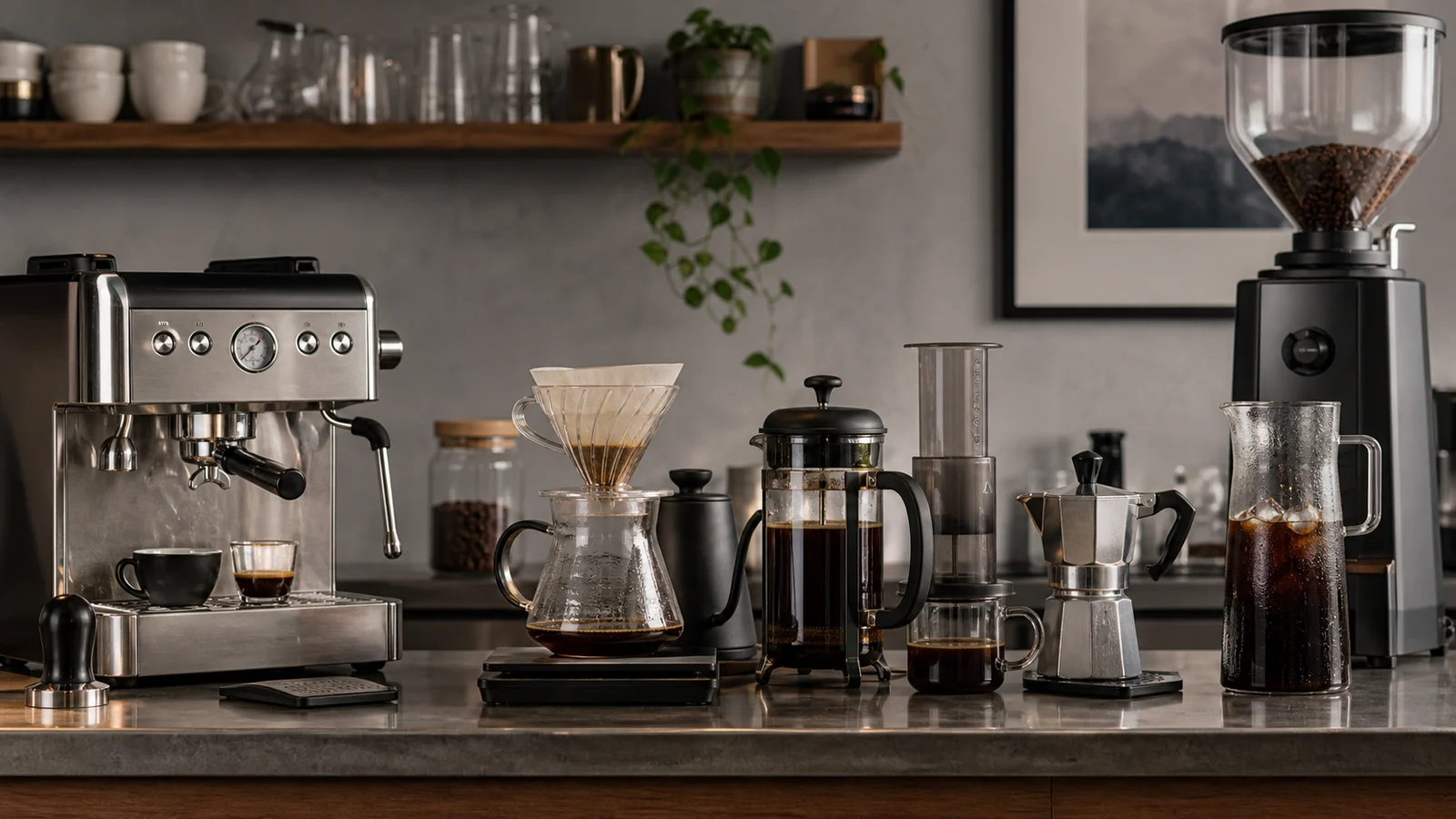
No single coffee method is objectively superior. Each brewer was engineered to highlight a distinct sensory dimension: crystal aromatic clarity, syrupy body, or effortless convenience.
Fluid mechanics
The 3 physical ways water extracts coffee
1. Gravity Percolation
Water passes downward through a coffee bed via gravity. Delivers peak flavor separation and crystal clarity. Examples: V60, Chemex, Kalita Wave.
2. Total Immersion
Grounds remain fully immersed with the entire water volume throughout the brew. Yields rich body and high error forgiveness. Examples: French Press, Cold Brew.
3. Pressurized Extraction
Water is forced through a compacted coffee puck under mechanical or steam pressure. Creates syrupy concentration and crema. Examples: Espresso (9 bar), Moka (~1.5 bar), AeroPress (~0.7 bar).
Complete matrix
Technical comparison table across 7 brewing methods
Evaluate each method by its filter type, common brew ratio, brew time, learning curve, and estimated kit cost:
Decision guide
Which coffee brewer fits your daily routine?
The beginner who wants great coffee with zero fuss
Both methods are virtually foolproof. They do not require goose-neck kettles or high-precision scales to produce delicious cups consistently.
The flavor enthusiast chasing delicate floral and fruit clarity
Fine paper filters trap heavy oils and fines, allowing delicate jasmine, bergamot, and tropical fruit notes to shine cleanly.
The espresso lover and milk drink enthusiast (Flat White, Cortado)
It is the only brewing method capable of emulsifying lipids into dense crema while providing high-pressure steam for silky microfoam.
The host brewing for multiple people in the morning
Enables effortless brewing of 500ml to 800ml in a single batch without repeating tedious single pours.
Frequently Asked Questions
Common questions on brewing methods
What is the most affordable method to start in specialty coffee?
The plastic Hario V60 dripper (around €8-12) or a basic French Press (€15-20). However, the single piece of equipment that makes the largest impact on cup quality before the brewer is a quality conical burr grinder.
What is the fundamental difference between percolation and immersion?
In percolation (V60, Chemex, Espresso), fresh water continuously passes through the coffee bed, extracting compounds via a constant concentration gradient. In immersion (French Press, Cold Brew), all coffee steeps with all water together; extraction rate naturally slows over time, producing a gentler, more forgiving cup.
Why does espresso require a significantly more expensive grinder than pour-over?
Because espresso extracts under 9 bar of pressure in just 25-30 seconds. To provide the exact hydraulic resistance required for that pressure, the grind must be micrometric with strict particle distribution to prevent channeling or choking the pump.