Cold Brew Coffee: Scientific Cold Extraction Guide & Master Recipe
Thermodynamic chemistry, precise ratio matrices, dual-stage filtration for liquor-like clarity, and cold storage up to 14 days without harsh acidity.
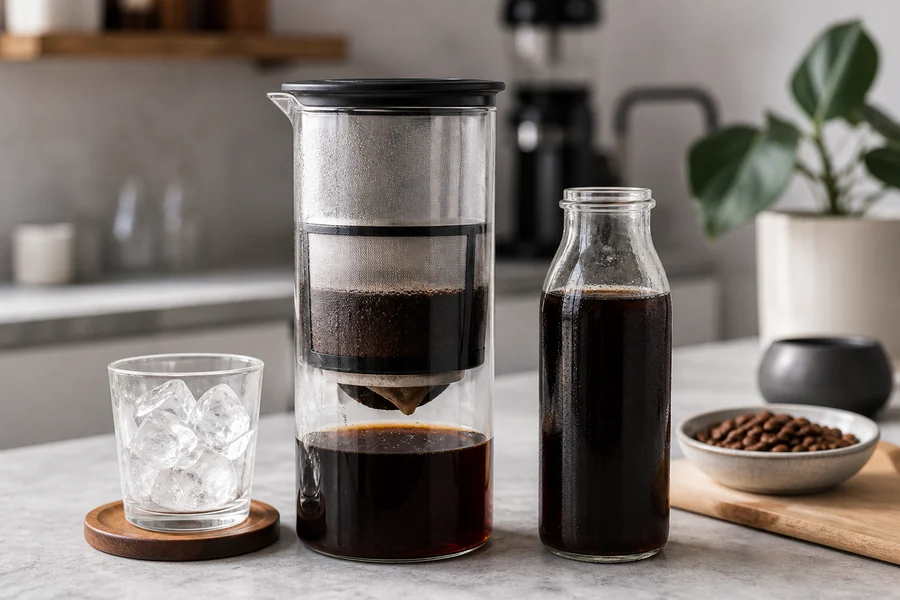
The 60-Second Cold Brew Protocol
1:5 (160 g coffee to 800 ml water) for versatile dilution with ice and milk.
Ultra-coarse (~1000–1200 µm, coarse rock salt texture) to avoid sediment and colloidal mud.
12–16 hours at room temp (18–22 °C / 64–72 °F) or 18–24 hours chilled (4 °C / 39 °F).
10–14 days in an airtight glass vessel in the fridge. Never store with spent grounds inside.
1. The Molecular Chemistry of Cold Brew: Why It Is Not Just Iced Coffee
The most widespread misconception among coffee drinkers is assuming that Cold Brew is simply standard coffee poured over ice cubes. Traditional iced coffee is brewed with hot water at 92–96 °C (197–205 °F) and chilled abruptly; that thermal shock pulls volatile chlorogenic acids and heat-degraded lipids that rapidly oxidize upon cooling, turning bitter and astringent.
Cold Brew operates on an entirely distinct thermodynamic principle: passive hydrothermal diffusion. Because there is no kinetic thermal energy to force dissolution, coffee compounds dissolve solely through gentle concentration gradients:
Selective Acid Dissolution
Water at 93 °C aggressively hydrolyzes chlorogenic and quinic acids. In cold water (4–20 °C), these compounds barely dissolve. The chemical outcome is a beverage with up to 66% less titratable acidity, eliminating harsh reflux and stomach irritation.
Sugar & Triglyceride Preservation
The compounds most soluble in cold water are simple sugars, polysaccharides, and delicate fruit aromatics. This highlights a natural perceived sweetness with notes of milk chocolate, caramel, and a velvety mouthfeel without any added sweeteners.
Lipid Stability Against Oxidation
Coffee oils do not suffer thermal pyrolysis. In hot brewed coffee, lipids turn rancid within 30 to 45 minutes of exposure. In cold brew kept anaerobic and chilled, oils remain structurally stable for up to two weeks.
2. The Ratio Matrix: Barista Concentrate vs. Ready-to-Drink (RTD)
The brew ratio (dry coffee weight to water volume) dictates your final Total Dissolved Solids (TDS). Cold brew relies on two primary preparation styles:
| Style | Coffee:Water Ratio | Dose per 1 L Water | Estimated TDS | Optimal Serving Mode |
|---|---|---|---|---|
| Barista Concentrate (Recommended) | 1:4 to 1:5 | 200 g – 250 g | 4.5% – 6.0% | Dilute 1:1 with milk, oat milk, soda water, or tonic over ice. Saves precious fridge space. |
| Ready-to-Drink (RTD) | 1:8 to 1:10 | 100 g – 125 g | 2.0% – 2.8% | Pour straight over 2–3 solid ice cubes. No prior dilution needed. |
| Light Chilled Filter | 1:12 to 1:15 | 65 g – 80 g | 1.3% – 1.6% | Light coffee tea-style infusion served neat without ice. Highlights subtle floral notes. |
Our standard recommendation is always to brew a 1:5 Concentrate. It takes half the space in your refrigerator, gives you total flexibility to adjust beverage strength on demand, and locks in delicate aromas far longer than pre-diluted batches.
3. Master Recipe: Café Guru's Universal Cold Brew Protocol
This recipe is calibrated to produce 800 ml of pure concentrate (1:5 ratio), yielding roughly 6–8 servings once diluted with ice or milk.
Ingredients & Measurements
- 160 g specialty whole-bean coffee (medium roast for chocolate/nutty profiles, or natural light roast for fruit complexity).
- 800 ml soft mineral or filtered water (50–120 ppm TDS).
Required Tools
- Burr grinder capable of ultra-coarse settings.
- Digital gram scale.
- Clean 1-liter airtight glass jar or cold brewer.
- Fine mesh strainer and pour-over dripper with paper filter (V60 or Chemex).
- 1
Weigh and Grind Ultra-Coarse
Weigh out exactly 160 g of coffee beans. Dial your burr grinder to its coarsest setting: particle sizing should resemble rock sea salt crystals or cracked peppercorns (1000–1200 microns). Grinding fine will clog filtration, producing cloudy sediment and astringent over-extraction.
- 2
Initial Hydration and Eliminating Air Pockets
Add the grounds into your glass steeping vessel. Pour the initial 200 ml of room-temperature water. Stir gently with a wooden or silicone spoon for 30 seconds. This pre-wetting phase ensures every particle is soaked, eliminating dry floating air pockets.
- 3
Final Pour and Steeping Environment
Add the remaining 600 ml of water to submerge all grounds completely. Seal the jar airtight and select your steeping environment:
- 4
The Secret to Crystal-Clear Dual Filtration
The hallmark of mediocre homemade cold brew is sludge at the bottom of the glass. For liquor-like clarity, apply a two-stage filtration routine:
- Stage 1 (Coarse Strain): Decant the liquid through a fine metal sieve to remove spent grounds. Never squeeze the coffee bed with a spoon (pressing forces bitter, cloudy oils into the brew).
- Stage 2 (Fine Polish): Pour the strained liquid through a dripper with a pre-rinsed paper filter (V60, Chemex, or standard drip filter). The paper captures all suspended micro-fines and insolubles.
- 5
Bottling, Chilling & Serving
Funnel the polished concentrate into a clean swing-top glass bottle. Chill thoroughly in the fridge before serving. To build a standard 200 ml drink, fill a tumbler with solid ice cubes, pour 100 ml of concentrate, and top with 100 ml of cold water or milk.
4. Equipment Options: From Zero-Cost Setups to Dedicated Brewers
You do not need specialized gear to make world-class cold brew, but dedicated immersion brewers drastically streamline cleanup and daily filtering:
Mason Jar + V60 Dripper
Any 1-liter airtight glass jar from your pantry acts as an immersion tank. Filter using whatever manual pour-over dripper and paper cone you already have in your kitchen.
Cost: $0French Press
Combine coffee and water directly in your French press carafe, place the lid on without depressing the plunger, and leave in the fridge. After 20 hours, gently push the mesh plunger down and polish through a paper filter.
Cost: Repurpose your pressHario Mizudashi Cold Brew (1 L)
Japanese heat-resistant borosilicate glass pitcher with a built-in micro-mesh permanent filter basket. Add grounds, pour water, and slide directly into your refrigerator door.
Toddy Cold Brew System Classic
The pioneering system that popularized cold brew across specialty coffee shops. Uses thick reusable felt disc filters to produce exceptionally clean, sediment-free concentrate for large batches.
Special Mention: Kyoto Slow Drip (Dutch Coffee)
Unlike full immersion brewing, the traditional Japanese Dutch Coffee method uses a tall glass drip tower where cold iced water drips slowly (1 drop every 1–2 seconds) through a coffee column over 4 to 6 hours. It yields unprecedented aromatic definition and bright floral notes, though it requires specialized laboratory-style borosilicate glass towers.
5. Food Safety, Microbiology & Cold Storage Rules
Unlike hot coffee (which oxidizes within 30 minutes), properly filtered cold brew is stable and stays fresh for up to 14 days in the refrigerator without degradation. Maintaining shelf life requires three hygiene rules:
Never store cold brew in the fridge with coffee grounds sitting at the bottom. After 24 hours, all sweet solubles have extracted; prolonged contact will begin dissolving bitter lignins and wood cellulose, spoiling your brew.
Coffee easily absorbs ambient refrigerator odors (onions, cheese, dairy). Use airtight swing-top glass bottles or mason jars pre-scalded with boiling water before filling.
Store your bottle toward the back of the fridge where temperature stays constant, avoiding the door bins. Leaving concentrate above 8 °C (46 °F) can encourage lactic bacteria growth, turning the brew unpleasantly sour.
6. Serving Variations & Coffee Bean Pairing
With a rich cold brew concentrate waiting in your fridge, explore these popular variations:
🍸 Cold Brew Tonic
The ultimate summer refresher. Pour 80 ml of cold brew concentrate over a highball glass filled with ice and 120 ml of premium Mediterranean tonic water. Garnish with an expressed orange or grapefruit twist. Quinine balances the coffee's dark chocolate undertones.
🍺 Homemade Nitro Cold Brew
Want that velvety Guinness-style cascading microfoam? Pour 400 ml of filtered concentrate into a culinary whipped cream dispenser, charge with one nitrous oxide (N₂O) or pure nitrogen (N₂) cartridge, shake for 10 seconds, and dispense cold into a glass without ice.
🥛 Velvety Cold Brew Latte
Combine 100 ml of concentrate with 100 ml of whole fresh milk or barista-grade oat milk over ice. Because cold brew lacks harsh acidity, the milk never curdles, tasting like melted coffee gelato.
Which Coffee Beans Should You Choose for Cold Brew?
Roast profile and processing method dramatically influence your cold brew cup profile:
- For fruity, complex, tea-like Cold Brew: Choose natural process or anaerobic fermented Arabicas (Ethiopia, Kenya, Colombia) with a light to medium-light roast. Expect blueberry, stone fruit, and cordial notes.
- For rich, classic cold brew (best with milk or tonic): Choose washed Central or South American coffees (Guatemala, Brazil, Honduras) with a balanced medium roast. You'll get deep dark chocolate, toasted hazelnut, and brown sugar sweetness.
7. Cold Brew Frequently Asked Questions (FAQ)
Does Cold Brew have more or less caffeine than hot coffee or espresso?
It depends on the brew ratio and serving style. On a per-gram basis, hot water extracts caffeine substantially faster (within 30 seconds for espresso or 3 minutes for pour-over), but cold brew compensates for cold temperatures with an extensive contact time of 16 to 24 hours and a much higher coffee-to-water ratio (1:4 to 1:8 versus 1:16 in drip). As a result, an undiluted glass of cold brew concentrate contains considerably more caffeine than a standard filter coffee or single espresso shot. However, when diluted 1:1 with water or milk, the final caffeine content per serving equilibrates to roughly that of a standard cup of drip coffee.
Why does my homemade Cold Brew taste bitter or have a muddy texture?
Bitterness and murky sediment in cold brew are almost always caused by two errors: grinding too fine or skipping secondary filtration. When coffee is ground too finely, microscopic particles ('fines') lead to astringent over-extraction and slip right through metal mesh filters, remaining suspended in the liquid and oxidizing in the fridge. The remedy is to adjust your grinder to an ultra-coarse setting (resembling coarse sea salt crystals) and always perform a two-stage filtration: first through a mesh strainer to catch bulk grounds, and then through wet paper filter (V60 or Chemex) to trap colloidal fines.
Is it better to steep cold brew in the refrigerator or at room temperature?
Both methods work, but they yield distinct sensory profiles and extraction kinetics. Room-temperature steeping (18–22 °C / 64–72 °F) extracts faster (12–16 hours) and yields a bolder body with deep notes of dark chocolate, toffee, and toasted nuts. Refrigerator steeping (4 °C / 39 °F) extracts much slower (18–24 hours), but better preserves delicate volatile aromatics (bright malic acidity, floral, and berry notes) while providing greater microbiological safety in warm kitchens.
Can I heat up Cold Brew to drink it as hot, low-acid coffee?
Yes, absolutely. In fact, this is a popular brewing hack for individuals with sensitive stomachs or acid reflux. Because harsh chlorogenic acids and thermal astringency were never extracted during the cold maceration, gently warming cold brew concentrate (by adding boiling water at a 1:1 ratio or warming it on the stovetop below boiling) produces an extraordinarily sweet, smooth cup with up to 66% less perceived acidity than standard hot brew.
What type of water should I use for making Cold Brew at home?
Because there is no thermal energy to accelerate dissolution, water chemistry plays a vital role. Avoid heavily chlorinated, hard tap water (>200 ppm, which flattens sweetness and leaves a dull, chalky taste) as well as pure distilled/RO water (which produces a hollow extraction). Ideal brewing water has soft to moderate mineralization (50 to 130 ppm TDS), zero chlorine, and a balanced calcium-to-magnesium ratio to passively pull out sugars and delicate aromatics.