Plant / Green Bean / Roasting Science
Light, Medium, or Dark Roast: The Definitive Guide
A green coffee bean is a hard, dense, virtually odorless seed with 10–12% moisture. It is the roasting process that unlocks more than 800 volatile aromatic compounds through the precise application of thermal energy, airflow, and time.
Roast degree is far more than a visual color badge: it governs cellular density, chemical solubility in water, and the fundamental balance between single-origin terroir identity and sugar caramelization. In this guide, we dive into roasting thermodynamics, compare every flavor spectrum, and show you how to dial in water temperature and grind size for your brewer at home.
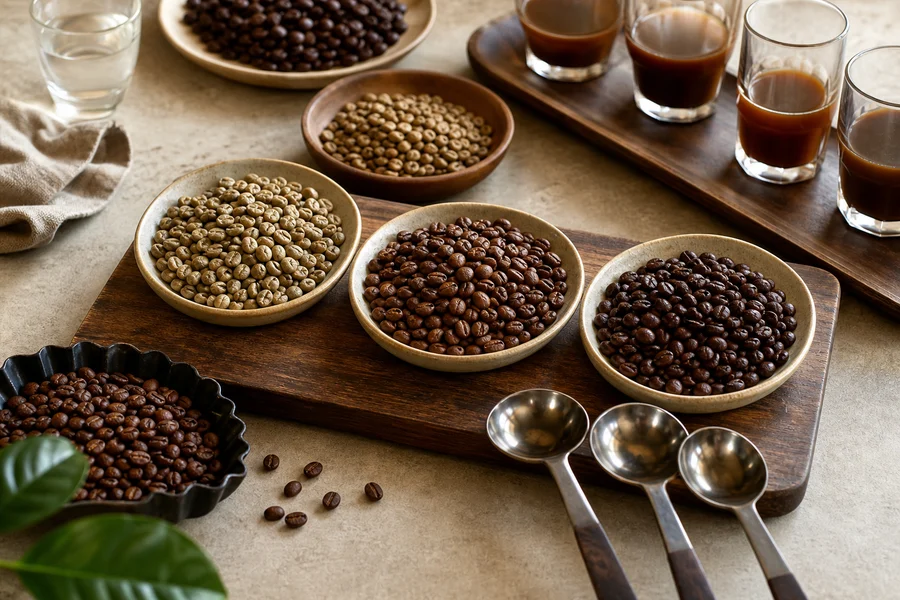
The 30-Second Verdict: Which Roast Should You Buy?
For Terroir Purists
Flavor Notes: Fresh fruits, delicate flowers, citrus zest, black tea.
Body / Acidity: Tea-like silky body, sparkling malic and citric acidity.
Best For: Pour-over methods (V60, AeroPress, Chemex) enjoyed strictly black.
The Sweet Universal Balance
Flavor Notes: Milk chocolate, toasted hazelnut, toffee, red apple.
Body / Acidity: Round medium body, sweet balanced acidity.
Best For: Everything: modern espresso, automatic batch brewers, moka pot, and silky flat whites.
For Body & Milk Lovers
Flavor Notes: 90% dark cocoa, sweet wood smoke, cedar, dark spices.
Body / Acidity: Heavy syrupy body, virtually zero perceivable acidity.
Best For: Traditional Italian espresso, moka pot, and milk-forward drinks (Flat White, Latte).
Thermodynamics & Extraction Parameters
Roast Levels Technical Comparison Matrix
Bean solubility dictates how coffee yields flavors into hot water. Brewing a dense light roast with the exact same temperature and grind settings as a porous dark roast guarantees an unpleasant cup:
| Roast Level | Agtron Scale (Gourmet) | Final Bean Temp | Cellular Solubility & Porosity | Optimal Water Temp | Relative Grind Setting | Ideal Brewing Methods |
|---|---|---|---|---|---|---|
| Light Roast (Cinnamon / City) | 80 – 95+ | 196 – 205 °C / 385 – 401 °F | Low porosity; dense cellulose matrix. Slow, selective solubility. | 94 – 96 °C (201 – 205 °F) | Finer (increases contact area) | V60, Chemex, AeroPress, Kalita Wave, Specialty batch brew. |
| Medium Roast (City+ / Full City) | 60 – 75 | 210 – 218 °C / 410 – 424 °F | Moderate porosity; uniform cellular expansion and even solubility. | 90 – 93 °C (194 – 199 °F) | Medium (standard recipe dial) | Specialty espresso, Drip makers, Moka pot, French press. |
| Medium-Dark Roast (Full City+ / Viennese) | 45 – 55 | 220 – 225 °C / 428 – 437 °F | High porosity. Aromatic oils beginning to bead on the surface. | 88 – 90 °C (190 – 194 °F) | Medium to coarse | Thick-crema espresso, Traditional moka, Cortado and Cappuccino. |
| Dark Roast (French / Italian / Dark) | < 40 | > 228 °C / > 442 °F | Fractured cell walls. Extremely permeable; releases bitter compounds rapidly. | 85 – 88 °C (185 – 190 °F) | Coarser (prevents bitter overextraction) | Traditional Neapolitan espresso, Latte, Iced milk drinks. |
Roasting Chemistry
The Chemistry of Roasting: What Happens Inside the Bean?
Roasting coffee is not simply baking or scorching a seed: it is a high-precision thermodynamic journey where thermal energy drives irreversible chemical reactions:
Drying Phase (0 to 160 °C / 320 °F)
The green bean enters the hot drum absorbing thermal energy (*endothermic phase*). Over the first 4 to 6 minutes, internal bean moisture drops from an initial 10–12% down to approximately 4%.
The bean transitions from vibrant emerald green or blue-green to pale butter-yellow. The aroma evokes fresh-cut hay, raw grain, or steamed vegetables.
The Maillard Reaction (160 to 198 °C / 320 to 388 °F)
Passing 160 °C, amino acids combine with reducing sugars in a cascade of complex reactions identical to those that brown a loaf of crusty sourdough bread or sear a steak.
This phase synthesizes melanoidins (brown polymers that provide tactile body and crema in the cup) and generates hundreds of aroma compounds responsible for toasted malt, biscuit, and roasted nut aromas.
Caramelization and First Crack (196 to 205 °C / 385 to 401 °F)
The defining milestone of the roast. Superheated water vapor and carbon dioxide build up pressures exceeding 25 atmospheres, rupturing bean cell walls with a distinct, audible snapping sound resembling popping corn.
The reaction becomes briefly exothermic (releasing heat). The bean doubles in physical volume and expels silver skin chaff. Sucrose sugars caramelize intensely, and harsh chlorogenic acids degrade into sparkling malic (apple), citric (lemon/orange), and phosphoric acids characteristic of specialty coffees.
Pyrolysis and Second Crack (>224 °C / >435 °F)
If the roaster pushes heat beyond the first crack, the woody cellular matrix decomposes in a process of pyrolysis (thermal breakdown without combustion).
A second, sharper, crisper crackling sound is heard (*Second Crack*), like twigs breaking in a campfire. The bean's woody matrix collapses: internal lipid oils migrate to the outer surface, sugars carbonize, and individual terroir characteristics are replaced by smoky roast, dark baker's cocoa, cedar, and peat notes.
Flavor Profiles
In-Depth Profile Analysis: Light, Medium, or Dark
Each roast level delivers distinct sensory strengths and requires thoughtful extraction parameters to shine in your cup:
The Purest Expression of Terroir and Botanical Varietal
Light roasting stops shortly after or during the late stages of First Crack. By applying just enough thermal development to make the bean soluble without cooking away delicate organic acids, the unique fingerprint of the farm and processing method remains pristine. Before reaching the roaster drum, bean density and sugar precursors are sculpted during harvest: explore our in-depth guide on coffee processing differences (washed, honey, natural, and experimental) to understand how post-harvest biochemistry shapes the cup.
Sensory Profile in the Cup
- Acidity: Sparkling, juicy, and vibrant (citric, malic, tartaric).
- Dominant Notes: Orange blossom, jasmine, peach, bergamot, red currant, Earl Grey tea.
- Body: Light, tea-like, clean, and elegant.
- Finish: Crisp, floral, and lingering.
Home Dialing-In Tips
With dense, uncollapsed cellular walls, light roast coffee is the least soluble. To avoid sour underextraction:
- Use maximum water temperature: 94 °C to 96 °C (201–205 °F).
- Grind finer than your usual recipe to expose more extraction surface.
- Excel with washed coffees from African origins (Ethiopia, Kenya, Rwanda) or high-altitude Central American farms.
The Sweet Harmony Between Fruit Complexity and Caramel Body
Medium roasting develops beans past the end of First Crack, allowing the Maillard reaction and sucrose caramelization to mature fully without crossing into the destructive pyrolysis of Second Crack. It is the benchmark standard in specialty cafes worldwide.
Sensory Profile in the Cup
- Acidity: Smooth, rounded, and sweet (baked apple, dark cherry, ripe plum).
- Dominant Notes: Milk chocolate, toffee, roasted praline, brown sugar, toasted almond.
- Body: Medium, velvety, creamy, and satisfying.
- Finish: Long, sweet, and chocolaty.
Home Dialing-In Tips
The most forgiving and adaptable roast profile on the market:
- Water temperature: 91 °C to 93 °C (195–199 °F).
- Performs exceptionally across home espresso machines, batch drip brewers, and pour-over cones alike.
- Incredible both black and in short milk drinks (Cortado, Flat White).
Bold Intensity, Thick Crema, and the Soul of Italian Espresso
Dark roasts are taken into or through Second Crack. At this stage, origin soil and altitude subtleties yield to the roasting process itself, concentrating bitter phenolic compounds, sweet char, and thick body.
Sensory Profile in the Cup
- Acidity: Very low or virtually undetectable.
- Dominant Notes: 90% dark baker's cocoa, sweet charcoal, toasted walnut, black licorice, pipe tobacco.
- Body: Heavy, syrupy, dense, and oily.
- Finish: Intense bittersweet dark chocolate lingering.
Home Dialing-In Tips
Beans are brittle and porous; solubles extract almost instantaneously into water:
- Lower your water temperature: 85 °C to 88 °C (185–190 °F) to prevent extracting harsh, ashy tannins.
- Coarsen your grind to speed up water flow and prevent overextraction.
- The gold standard for moka pots, traditional cappuccinos, and sweetened iced lattes.
Brewing Method Pairings
Choosing the Right Roast for Your Brewer and Drink
Match your coffee beans to your extraction equipment and daily morning routine:
Manual Pour-Over (V60, Chemex, Kalita)
Best Match: Light or Light-Medium Roast
Paper filters trap heavy oils and fine sediment, engineered specifically to highlight clarity and delicate floral notes. A dark roast in a Chemex yields an unpleasantly flat, bitter brew.
AeroPress
Best Match: Light or Medium Roast
Combining immersion with pneumatic plunger pressure, the AeroPress extracts vibrant fruit sweetness from light roasts and rich cocoa notes from medium roasts with unmatched forgiveness.
Home Espresso
Best Match: Medium to Medium-Dark Roast
Extracting at 9 bars of pressure, medium roasts deliver exciting, juicy modern espresso. For lovers of thick, creamy hazelnut crema, medium-dark roasts offer effortless hydraulic resistance without finicky grind calibration.
Milk Drinks (Flat White, Latte)
Best Match: Medium or Medium-Dark Roast
Warm milk contains lactose sugars and fats that mask delicate florals; pairing milk with very bright light roasts can even curdle flavor perceptions into an unappealing sour curd taste. Medium roasts cut through dairy fat with balanced caramel and chocolate.
Moka Pot (Stovetop Espresso)
Best Match: Medium to Medium-Dark Roast
The moka pot brews near boiling point in a hot metal chamber. A balanced medium roast yields sweet richness without scorching; use low heat to avoid harsh bitterness.
Cold Brew
Best Match: Medium or Medium-Dark Roast
Cold water extraction over 12–24 hours avoids extracting harsh acidity, putting the spotlight on rich, smooth chocolate, toffee, and low-acid sweetness.
Debunking Coffee Myths
3 Common Roasting Myths Debunked by Science
"Dark roast coffee has much more caffeine than light roast"
The Scientific Reality:
The caffeine molecule is thermally stable up to approximately 235 °C (455 °F). What changes drastically is bean density: dark roast beans lose up to 18–20% of their mass in water and organic matter.
If you dose by weight using a digital scale (18 grams of coffee), dark roast contains slightly more caffeine because you need more individual lightweight beans to reach 18 grams. If you measure by volume (with a scoop), light roast has more caffeine because dense beans pack tighter. In the cup, the difference is negligible (under 5%).
"The acidity in light roast coffee hurts your stomach"
The Scientific Reality:
Acidity in specialty coffee describes a fruit-forward flavor profile (like biting into a crisp green apple or juicy cherry), not stomach-damaging acid. Brewed coffee pH sits between 4.8 and 5.1—much less acidic than beer (pH 4.0), orange juice (pH 3.5), or cola (pH 2.5).
Gastric discomfort is typically caused by low-grade commercial coffees packed with over-roasted defects that release harsh irritants such as degraded N-methylpyridinium.
"Oily, shiny beans are a sign of peak freshness"
The Scientific Reality:
Lipid oils on the surface mean internal cellular walls have fractured from intense heat (Second Crack). Once oils reach the bean exterior, they oxidize rapidly in the presence of air, turning rancid within days.
In high-grade specialty coffee, beans should look matte, dry, clean, and free of surface sweating. Store your beans in airtight opaque canisters as detailed in our guide to coffee bean storage.
Common Questions
Frequently Asked Questions About Roast Levels
Which roast level is most recommended for specialty coffee beginners?
A medium roast is the ideal starting point. It strikes the most harmonious balance between origin terroir characteristics (sweet fruit, delicate florality) and sucrose caramelization compounds (milk chocolate, toffee, toasted hazelnut). Furthermore, its open cellular matrix boasts a forgiving, moderate solubility: it won't taste harshly sour if your brew water drops slightly below 93°C (199°F), nor will it extract astringent bitterness if your grind size isn't dialed in with micron precision.
Why does my light roast coffee taste sour or grassy instead of sweet and floral?
Light roasts retain high cellular wood density and lower solubility. If your cup tastes sharply sour, salty, or like raw vegetables, you are experiencing underextraction: the water failed to dissolve the slower-yielding aromatic sugars and volatile compounds. To correct this: 1) raise your water temperature to 94–96°C (201–205°F) (or straight off boil); 2) grind a couple of clicks finer to increase total extraction surface area; and 3) extend your brew ratio (e.g., from 1:15 to 1:16 or 1:17 in pour-over) to wash more solvent through the coffee bed.
Does dark roast coffee contain more or less caffeine than light roast?
The caffeine molecule is highly thermostable and barely degrades throughout roasting. However, as roasting progresses, coffee beans shed up to 18–20% of their mass in water vapor and organic matter while expanding physically. Therefore: if you weigh your coffee with a digital scale (in grams), dark roast contains slightly MORE caffeine (because more individual light beans are required to reach 15 grams). If you measure by volume (with a scoop), light roast contains more caffeine because the beans are smaller and denser.
Do shiny coffee beans with visible surface oil indicate superior quality or freshness?
Contrary to commercial advertising, shiny beans covered in surface oil usually indicate an excessively dark roast or stale, oxidized coffee. In light and medium roasts, lipids stay safely trapped within the bean's woody cellular walls. In very dark roasts (such as French or Italian roasts), the intense heat of pyrolysis ruptures cell walls, forcing volatile aromatic oils out to the surface where they oxidize and turn rancid rapidly when exposed to air.
How long should coffee rest after roasting before brewing?
Freshly roasted beans contain high concentrations of carbon dioxide (CO₂) trapped under pressure. Brewing within the first 48 hours causes violent bubbling that triggers channeling and blocks uniform water contact. As a general rule for resting (*degassing*): light roast: 10 to 21 days (dense beans release CO₂ very slowly); medium roast: 7 to 14 days; and dark roast: 4 to 7 days (their fractured cellular pores shed trapped gas rapidly).