Comparisons / Grinding / Buying decision
Manual vs. Electric Grinder: which to buy?
The dilemma isn't "which is better", but which fits your routine and budget. We break it down by return on investment, effort, speed and convenience, with a clear matrix and a final pick. New to this? Start with the complete grinder guide.
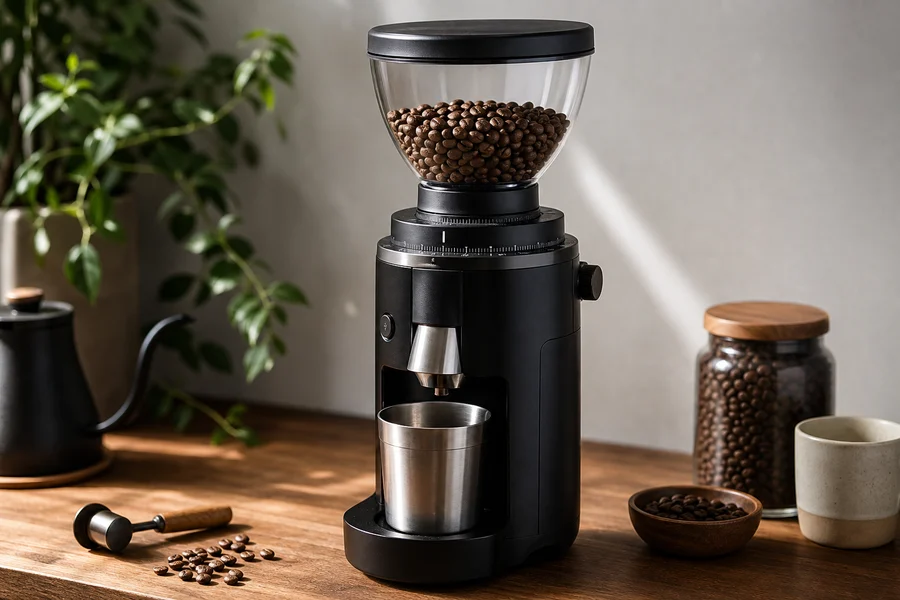
The key argument: return on investment
What really defines your cup is grind consistency, and that depends on burr quality and alignment (whether conical or flat). Here's the manual's big advantage: with no motor or electronics to pay for, it spends almost all the cost on better burrs. So at the same price, a manual grinder usually delivers a finer, more consistent grind than an equivalent electric, plus near-zero retention (always-fresh coffee; we explain why it matters in the best home grinders guide).
The electric, in turn, buys convenience and speed: it grinds at the push of a button in seconds, ideal for several cups in a row or for pulling espresso daily without tiring your arm.
Comparison matrix
General tendencies; the specific model always rules.
| Factor | Manual | Electric | Edge |
|---|---|---|---|
| Burr quality per euro | Very high | Lower at same price | Manual |
| Coffee retention | Near zero | Low to medium | Manual |
| Convenience and speed | 30-60 s by hand | Instant | Electric |
| Several cups in a row | Tiring | Effortless | Electric |
| Noise | Silent | Noisy | Manual |
| Portability (travel, office) | Excellent | Fixed | Manual |
| Counter space | Minimal | Takes room | Manual |
| Entry price | From ~€30-70 | From ~€110-170 | Manual |
Choose manual if…
When the manual is worth it
You brew 1-2 cups a day, are on a tight budget and want the best possible grind for your money. Also if you travel, share a flat, or enjoy the ritual of hand grinding. It pairs beautifully with filter methods like the V60 or the French press.
Ready to pick one? Compare options in our best manual grinders guide.
Choose electric if…
When the electric pays off
You brew several cups daily or coffee for the family, value absolute convenience, or pull espresso often (where grinding fine by hand is tiring). It's the comfortable everyday choice.
By method, see the espresso comparison or the home grinders selection (filter).
A starting point
One recommendation of each type
Two solid options to start; find more in the linked comparisons.
TIMEMORE C3 ESP Pro
S2C steel conical burrs, near-zero retention and easy disassembly. Excellent burrs for the price.
Baratza Encore
40 mm steel conical burrs with 40 grind settings. Very easy cleaning (top burr pops out) and low-to-medium retention. The classic filter entry grinder.
Verdict
If budget rules and you brew a few cups, buy manual: you'll get higher-grade burrs and fresher coffee for the same money. If convenience and volume rule (family, daily espresso), buy electric. And remember to split your budget well between grinder and machine: work out the total in our how much a home espresso setup costs guide.
FAQ
Frequently asked questions
At the same price, which burrs are better, a manual's or an electric's?
Almost always the manual's. By not paying for a motor, electronics or housing, a manual grinder can fit better-quality, better-aligned burrs for the same money. So on a tight budget, a manual usually gives a better cup than an electric at the same price.
How long does hand grinding take?
For a filter dose (15-20 g) a good manual grinder with smooth bearings usually takes 30-60 seconds. For espresso (18 g very fine) it takes more effort and time. If you brew for several people daily, that minute per cup adds up, and that's where electric wins.
Does electric retain more coffee?
It depends on the design, but in general manuals are near-zero retention, while electrics range from low to medium. Retention matters for freshness and because it makes dialing recipes harder. We explain it in detail in our best home grinders guide.
What about noise and portability?
Manual is silent and portable (great for travel, the office, or not waking anyone in the morning). Electric is fixed and noisy, but grinds at the push of a button.
Keep going deeper
Back to the complete grinder guide
Fundamentals, conical vs flat burrs and all our comparisons in one place.